
Choosing a Japanese kei van starts with how you want to use it. A work-focused cargo van, a passenger-oriented wagon and a retro-styled classic might look similar in an auction listing, but they can offer very different interiors, equipment and mechanical layouts.
The names can be confusing, too. Suzuki distinguishes the Every from the Every Wagon. Honda offered the Acty Van alongside the passenger-oriented Vamos. Mitsubishi's range included the Minicab, Bravo and later Town Box. Understanding those relationships makes comparing individual vehicles much easier.
This guide focuses primarily on older Japanese kei vans, including the models customers often ask us to source. Our starting point is simple: which type suits your plans, and what needs checking before you buy?

Cargo Van or Passenger Wagon: What's the Difference?
Before choosing a manufacturer, consider whether your priority is carrying equipment or carrying people.
Commercial vans such as the Suzuki Every and Daihatsu Hijet Cargo were developed around working use. Passenger-oriented counterparts placed more emphasis on the seating and cabin experience.
The distinction is not just a different badge. When Suzuki introduced the Every Wagon in 1999, it positioned the rear seats 90 mm farther back than in the commercial version and added reclining rear seats with a centre armrest.
That gives buyers a useful starting point:
- If you expect to carry tools, stock or outdoor equipment, compare the cargo layout and documented load configuration.
- If rear passengers will travel regularly, pay close attention to their seats, legroom, access and comfort.
- If you want both, inspect how the seats fold and what space remains in each configuration.
Do not assume that every passenger version has the same equipment — or that every cargo van has an identical interior. The year, generation and trim still matter.
Honda Acty Van and Honda Vamos
The Honda Acty Van and Vamos are a good example of why buyers should look beyond the manufacturer's badge.
Honda's archive distinguishes the Acty Van sold from May 1988 to April 1999 from the model introduced in May 1999. Two listings described simply as "Honda Acty vans" can therefore refer to different generations.
The Vamos arrived in 1999 as a passenger-oriented kei vehicle. Honda used a mid-engine, rear-wheel-drive layout, placing the engine beneath the rear-seat floor. Its launch information highlighted the resulting cabin packaging, including front-floor space and rear-passenger foot space.
What should buyers compare?
If you are considering an Acty Van or Vamos, start with the actual vehicle:
- Is it manual or automatic?
- Is A/C fitted, and does it operate correctly?
- What seating arrangement does it have?
- How much cargo space remains with the rear seats in use?
- Does the interior suit regular passengers or mainly equipment?
An automatic Honda van with A/C may meet your basic requirements, but that is only the beginning. Mileage, maintenance, condition and the results of an inspection determine whether that particular example deserves a closer look.
We would not choose between two vehicles solely because one has the preferred model name.
Subaru Sambar and Dias Wagon
For buyers interested in mechanical character, the older Subaru-built Sambar and Dias models deserve attention.
Subaru's catalogue lists the February 1999 Sambar Dias Supercharger with a 658 cc EN07 four-cylinder engine. Its Dias Wagon catalogue also documents rear-engine, rear-wheel-drive versions alongside four-wheel-drive versions.
Those details help explain why these vans attract interest, but they should not become blanket claims about every vehicle wearing a Sambar badge. Not every Sambar is supercharged, and later model relationships changed. The Dias Wagon introduced in 2009 was based on the Daihatsu Atrai rather than continuing the earlier Subaru design.
What should buyers compare?
- The generation and model code.
- Naturally aspirated or supercharged specification.
- Transmission and drivetrain.
- Passenger seating versus cargo configuration.
- Documented condition and maintenance.
The key is to compare a specific Sambar or Dias with a specific alternative — not to assume that a familiar badge guarantees a particular engine or layout.
Suzuki Every and Every Wagon
The Suzuki Every family offers one of the clearest examples of the cargo-versus-passenger distinction.
Suzuki unified its van naming under Every in 1985. In 1999, it introduced the Every Wagon as a passenger vehicle, distinguishing it from the commercial Every.
The original Every Wagon's passenger focus included additional rear legroom, reclining rear seats and a centre armrest. Suzuki's historical archive also records an intercooled turbocharged F6A engine for the 1999 launch model. That is a generation-specific detail — not a description of every Every or Every Wagon.
Which one should you consider?
If equipment and cargo are your priority, begin by comparing the commercial Every's layout. If you expect to use the rear seats regularly, compare the Every Wagon's passenger accommodation.
Either way, request interior photographs rather than relying on an exterior shot. Similar-looking vans can feel quite different once you consider the seats, trim and usable load space.
Also distinguish older vehicles from current models. Modern equipment shown on a manufacturer's website should not be assumed to exist on a van built decades earlier.
Daihatsu Hijet Cargo and Atrai
The Daihatsu Hijet Cargo and Atrai names also need to be understood in the context of their generation.
In its 2019 product information, Daihatsu described the Hijet Cargo as a commercial vehicle and the Atrai Wagon as a passenger vehicle. The redesigned Atrai introduced in 2021, however, moved to commercial registration.
That change matters when researching older stock. A description of today's Atrai should not be copied onto a 1990s Atrai listing.
What should buyers compare?
- The exact generation and model code.
- Rear seating and recorded load configuration.
- Transmission and drivetrain.
- Equipment fitted to the individual vehicle.
- Whether the appeal is cargo use, passenger use or styling.
For an older Atrai, we would want to establish the specifications from the vehicle and its supporting records rather than fill in gaps using information from a newer model.
The Atrai Classic also deserves a separate look for buyers drawn to retro styling — but we will come back to that at the end.
Mitsubishi Minicab, Bravo and Town Box
Mitsubishi is worth including in a kei-van search rather than limiting the shortlist to Honda, Subaru, Suzuki and Daihatsu.
Mitsubishi redesigned the Minicab in 1999, then introduced the Town Box in April that year as the successor to the Bravo. The Town Box's passenger-oriented features included a split rear bench with a fully reclining arrangement. Its launch range offered different engine and drivetrain choices, including automatic versions.
The important distinction is between what existed in the range and what is fitted to the vehicle in front of you. A listing must identify its own engine, transmission and drivetrain.
One naming detail is particularly useful: the Town Box Wide was a separate, larger 1.1-litre model, not the same 660 cc kei vehicle.
What should buyers compare?
- Minicab, Bravo or Town Box model identity.
- Engine and transmission specification.
- Rear-seat arrangement.
- Condition relative to the asking price.
- Documentation and preparation required.
A Mitsubishi may suit your requirements well, but it should earn its place on the shortlist through its actual specification and condition. Our own 1992 Mitsubishi Minicab Van is a good example of an older cargo layout you can compare against.
What About Kei Van Campers?
For this guide, it is useful to treat a camper as a layout or conversion choice rather than assume it identifies a particular factory model.
If you want a van for camping, begin with measurements and a realistic plan:
- How long and wide is the usable sleeping area?
- Can you retain the seats you need?
- Where will luggage go when the bed is set up?
- Is the bed removable?
- What permanent equipment has been installed?
- Can the seller document how the conversion was carried out?
A photograph of a mattress inside a van does not answer those questions. Nor does calling a vehicle a "micro camper" establish that it suits your height or travel plans.
For a buyer who wants occasional overnight use, a simple layout may be enough. Someone planning longer trips should be more specific about storage, seating and everyday usability before choosing the base vehicle.
Which Type of Kei Van Suits You?
There is no single winner for every buyer. We would narrow the search around your priorities.
| Your priority | What to compare first |
|---|---|
| Tools and equipment | Cargo layout, access and documented load configuration |
| Regular rear passengers | Rear-seat comfort, legroom and access |
| Automatic transmission and A/C | Verified equipment on the individual vehicle |
| Camping | Measured interior space and conversion layout |
| Mechanical interest | Generation-specific engine and drivetrain design |
| Retro appearance | Classic-styled versions and the condition of their distinctive trim |
These categories overlap. You might want an automatic van with passenger seating and classic styling. That is a useful brief — but it still needs a budget, a condition standard and some flexibility about individual examples.
Looking for a particular kei van?
Tell us your preferred model, transmission, essential equipment and budget.
Custom orderWhat to Check Before Buying a Kei Van
Once you have chosen a type, the individual vehicle becomes more important than the general model comparison. Our approach would be to work through the following questions before recommending a purchase.
Confirm the specification
Establish the model code, generation, transmission, drivetrain and fitted equipment. Do not infer those details from a badge or a photograph alone.
Separate current mileage from historical records
A mileage entry on an older document may describe a past inspection, not the current odometer. Ask what the vehicle displays now and what supporting history is available.
If you want "lower mileage," define an acceptable range. Otherwise, the seller and buyer may be working toward different targets.
Test the equipment
"A/C listed" and "A/C tested" are different statements. The same distinction applies to other equipment: ask what has actually been checked and what remains unconfirmed.
Understand the condition
Request clear photographs of the exterior, interior and underside. Ask about corrosion, leaks, damage, unusual noises and any repairs being proposed.
Cosmetic cleaning and mechanical preparation should not be presented as the same thing.
Check the paperwork
Make sure the inspection report applies to the vehicle and is current. If a sheet is crossed out, marked invalid or replaced, obtain clarification before relying on it.
Establish the full buying scope
Separate the vehicle price from preparation, transport and other transaction costs. A useful quote should explain what is included and what remains outside it.
For an export purchase, eligibility and destination requirements should be checked separately for the actual vehicle and planned timing — not assumed from the model name. Our import eligibility guide covers the age rules we check on our side.
My Personal Favourites: The Classic-Styled Kei Vans
If you ask me which kei vans I am personally drawn to, it is the classic-styled ones. The Daihatsu Atrai Classic and Subaru Sambar Dias Classic are two of my favourites.
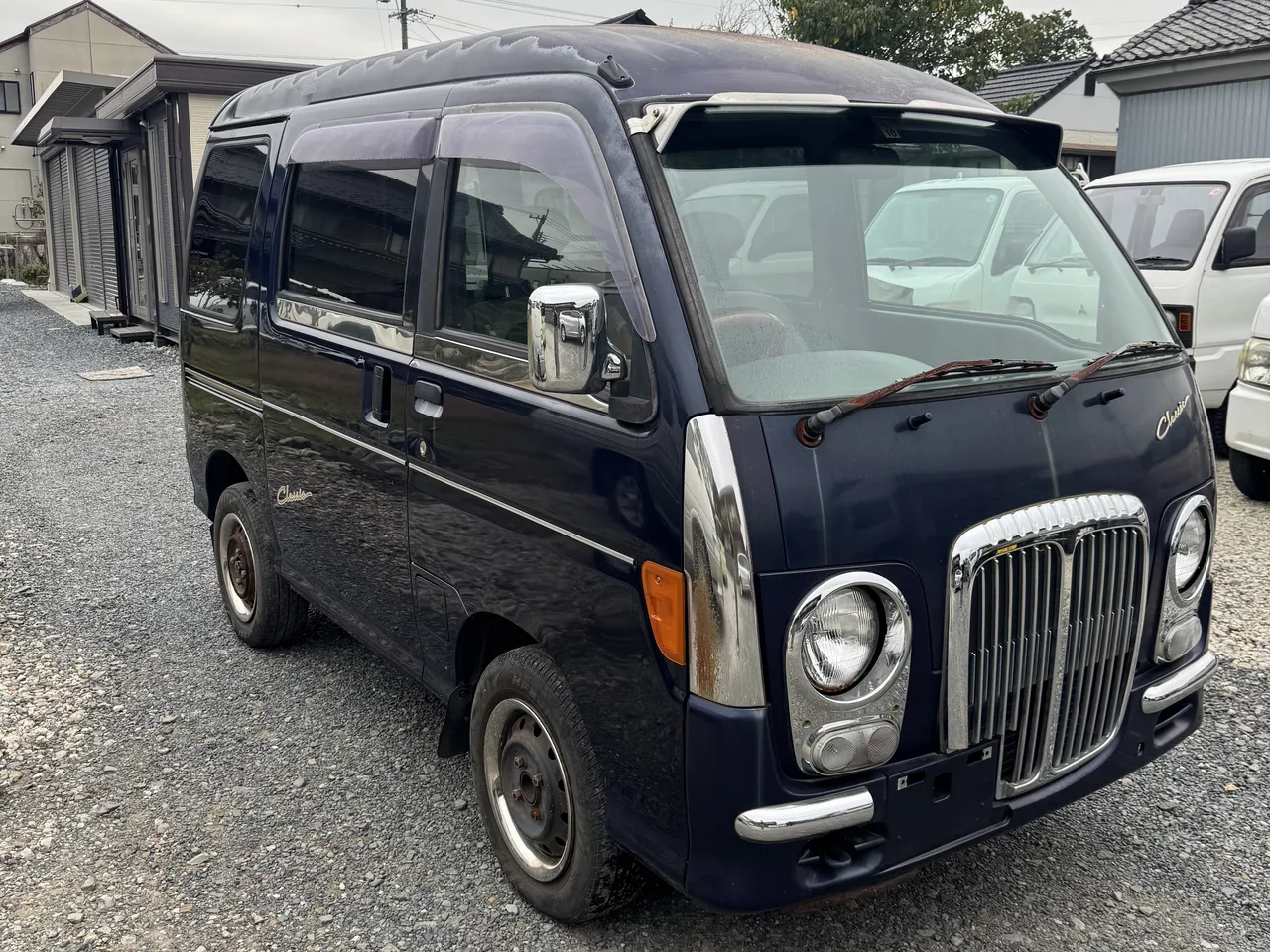
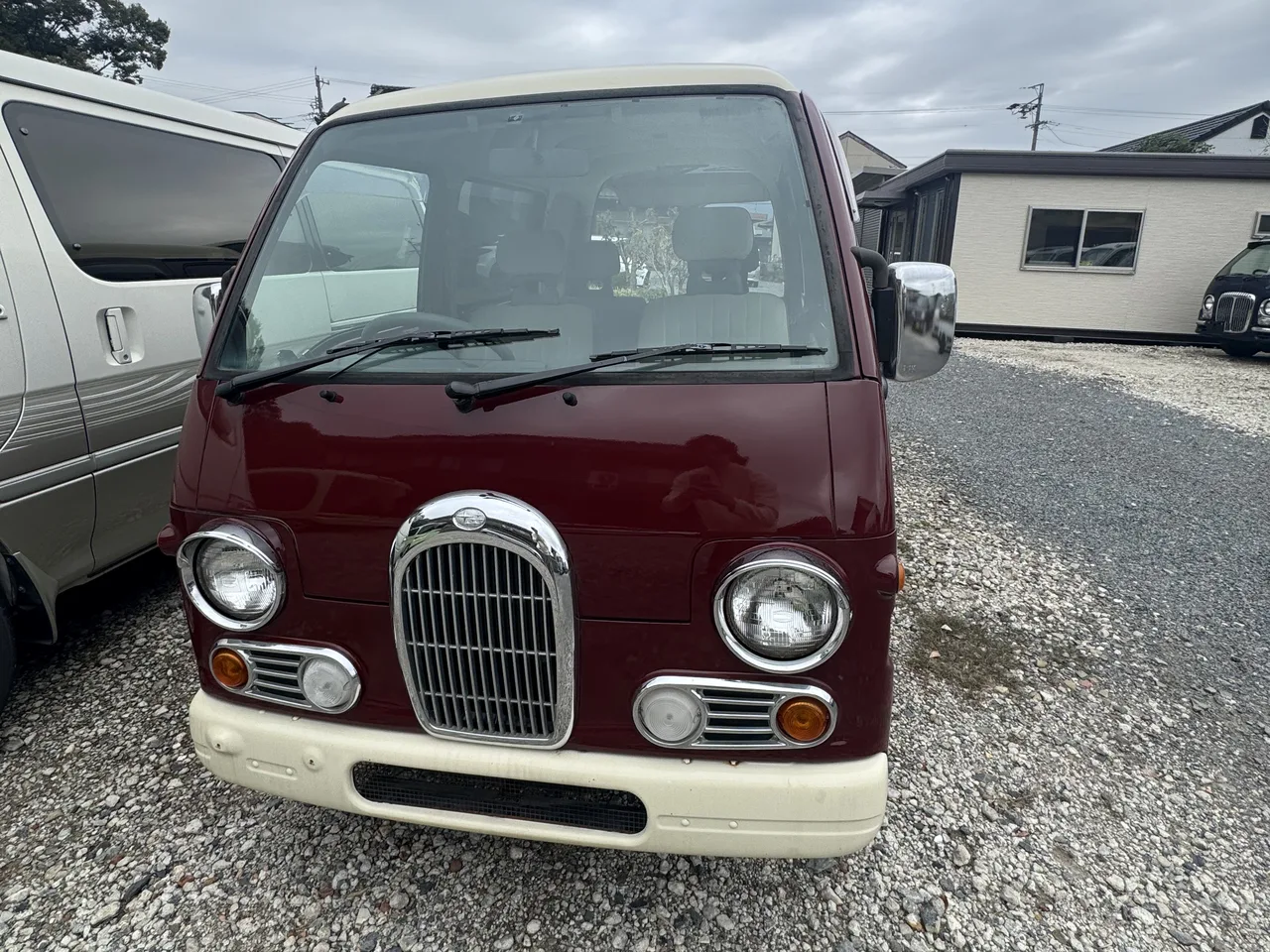
For me, it is their retro look and personality. I like a van that feels a little different — something that makes you turn around for another look after you park it. These are the kinds of vehicles I enjoy keeping an eye out for.
That is a personal preference, though, not a claim that they are better than every other kei van. A clean, straightforward cargo van may be the right answer for one customer, while another is happy to spend more time finding a classic-styled example they really connect with.
Condition, the equipment you need and how you plan to use the vehicle still come first. The styling is what makes me interested; the inspection is what helps decide whether a particular van makes sense.
Whether you want a practical cargo van, a passenger-oriented wagon or a classic with a bit more character, tell Circle Kei Motors what you have in mind. Start with your intended use, preferred transmission, essential equipment, acceptable mileage and budget. From there, we can narrow the search and examine individual vehicles rather than ask you to choose from a badge alone.
Find your kei van